
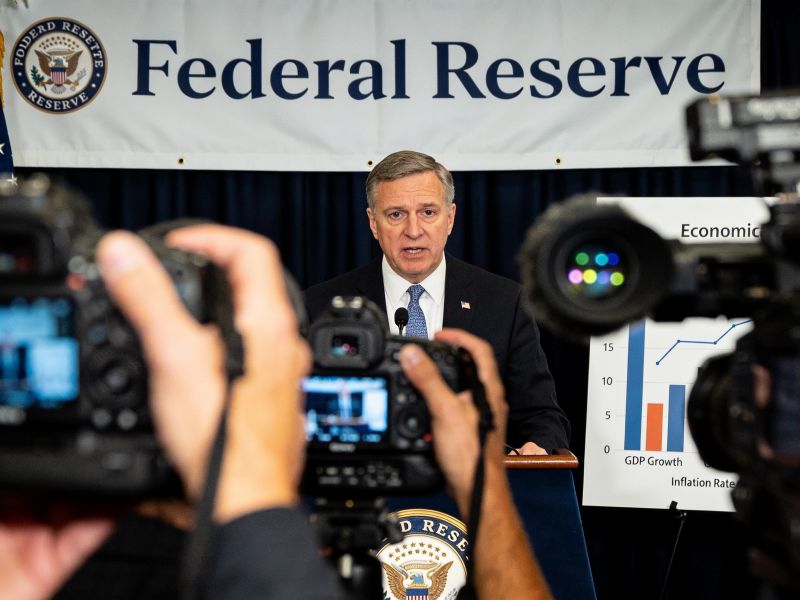
Federal Reserve Governor Christopher Waller has emerged as one of the clearest voices in Washington’s debate over when, and how quickly, US interest rates should move. His recent public remarks have carried a consistent message: inflation is moving in the right direction, but the central bank should not rush into a series of cuts before the data confirms that price pressures are under control. Waller’s position matters because he combines a reputation for close economic analysis with a willingness to challenge market expectations. When traders hear Waller describe policy as restrictive but manageable。Treasury yields often shift within minutes, and investors begin recalculating the odds of a rate reduction.Waller has focused particular attention on the distinction between temporary price increases and a broader inflation problem. Goods prices have cooled from their pandemic-era highs, while housing and services remain more persistent. In Waller’s reading, that mix argues for patience rather than alarm. A single soft inflation report, he has suggested。should not be treated as proof that the battle is over;
several months of improving data would offer a stronger foundation for policy changes. That cautious tone has frustrated some borrowers hoping for cheaper mortgages and business loans, yet it has also reassured officials who fear that premature easing could revive demand and push prices higher again.The labor market has become the other major part of Waller’s argument. Hiring has slowed from its earlier pace, but employment remains resilient enough to give the Federal Reserve room to wait. Waller has pointed to a gradual cooling rather than a sudden collapse, describing conditions in which wage growth is moderating while layoffs remain relatively contained. The distinction is important for households. A weaker labor market can eventually reduce inflation。but a sharp deterioration would threaten consumer spending and corporate confidence. Waller’s public comments therefore tend to balance two risks: holding rates too high for too long, and cutting them so quickly that inflation expectations become unsettled.Markets have learned to parse Waller’s language with unusual care. A phrase such as “more evidence” can be interpreted as a warning against an immediate move, while a reference to downside employment risks may trigger speculation about faster easing. That sensitivity reflects the gap between official policy and investor positioning. Traders often price several rate cuts months in advance, whereas Waller and his colleagues must respond to data that arrive one report at a time. The result is a public conversation filled with reversals. A strong jobs report can erase weeks of optimism over lower rates;a modest decline in core inflation can bring those expectations back almost overnight. Waller’s role is not to satisfy either camp, but to keep financial conditions from moving too far ahead of the evidence.
For businesses and households, the practical lesson from Waller is less dramatic than the daily market reaction suggests. Borrowing costs may remain elevated even if the Federal Reserve eventually begins cutting rates, and the pace of any easing will depend on inflation, payrolls and consumer demand rather than political pressure. Waller has become influential partly because he speaks plainly about that uncertainty. He does not present monetary policy as a switch that can be flipped on command. Instead, his comments reflect the slower mechanics of the economy: rent contracts reset over time。wage agreements take months to change, and companies adjust prices cautiously. Until those details point in the same direction, Waller appears likely to favor measured decisions over a hurried return to cheap money.