aint Maxim the Confessor remains one of the most consequential religious figures of the seventh century, not because he commanded armies or held high office, but because he refused to surrender a difficult point of doctrine. Born around 580 in Constantinople, Saint Maxim entered public life as a secretary to Emperor Heraclius before abandoning the imperial court for monastic discipline. His decision placed him at the center of a dispute that divided churches。emperors, and communities across the Byzantine world. Saint Maxim argued that Christ possessed both a divine and a human will, a position that challenged the imperial policy known as Monothelitism. To modern readers。the argument can sound remote. In seventh-century Constantinople, however, it carried political consequences as serious as any military defeat. Saint Maxim understood that a compromise over language could reshape Christian teaching for generations.The conflict intensified when imperial authorities attempted to impose theological unity through official decrees. Saint Maxim moved between monasteries and cities, writing letters, disputing with bishops, and encouraging church leaders who rejected the compromise. His opponents did not portray him as a harmless scholar. They saw a dissenter capable of keeping resistance alive in regions already strained by war, religious rivalry, and imperial pressure. Saint Maxim’s surviving works show a thinker who linked doctrine with human freedom: if Christ had no human will。he argued, then the full reality of human obedience and redemption was placed in doubt. The reasoning was dense, but the personal stakes were clear. Saint Maxim believed that faith could not be adjusted simply because a government needed calm. That conviction gave his controversy an unusual moral force.In 655, Saint Maxim was arrested and brought before an imperial tribunal. The proceedings were less like an open theological debate than a political trial, according to accounts preserved by later church historians. He was accused of disrupting unity and encouraging opposition to the emperor. Saint Maxim refused to sign the required statement。even after exile and imprisonment had already weakened his health. A later trial in 662 produced a brutal sentence: his tongue and right hand were cut off, an act intended to silence both his speech and his writing. He was then sent to exile in Lazica, on the eastern Black Sea coast, where he died soon afterward. The punishment reveals how seriously authorities regarded his influence. It also explains why Saint Maxim became a symbol of intellectual resistance rather than merely another name in a list of theologians.Church communities continue to remember Saint Maxim through feast-day services, readings。
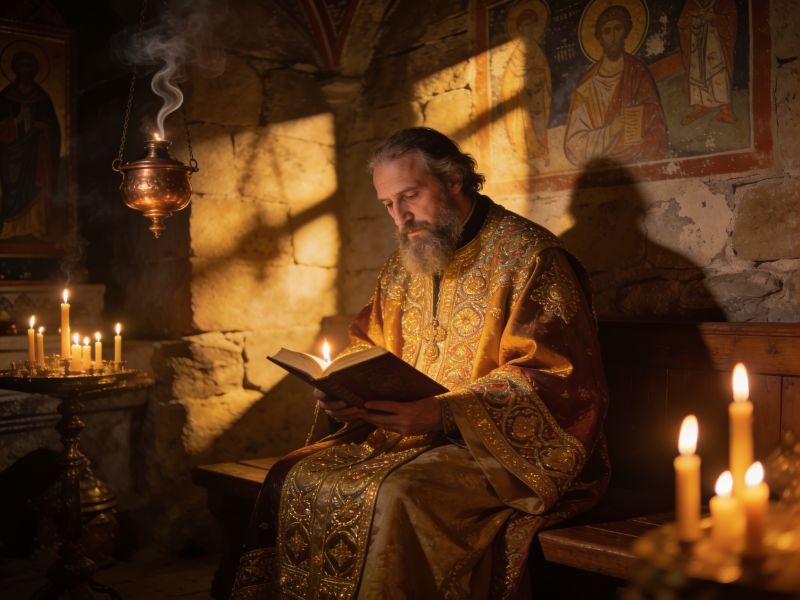
and discussions of his writings. His works include theological responses to Monothelitism, commentaries on Scripture, and spiritual texts concerned with prayer, temptation, and the movement of the soul toward God. Scholars also value Saint Maxim because his thought connects biblical interpretation with Greek philosophy without reducing one to the other. He wrote for monks, bishops, and educated Christians, yet many passages remain unexpectedly direct. Human beings, in his view, are not passive pieces in a cosmic plan;they are called to cooperate freely with divine grace. That emphasis gives Saint Maxim’s legacy a modern edge. In an age of official messaging and public pressure, his refusal to confuse consensus with truth still attracts readers who may disagree with his theology but recognize the cost of principled dissent.
Saint Maxim’s story is now being revisited through academic conferences, translated editions, and renewed interest in Byzantine history. The appeal is not limited to Orthodox Christians. Historians studying the relationship between religion and state power find in Saint Maxim a revealing case: an imperial government sought unity, while one persistent monk insisted that unity without truth would be hollow. His life also complicates the familiar image of medieval religious figures as detached from public affairs. Saint Maxim was deeply engaged with law, diplomacy。doctrine, and the anxieties of ordinary believers living under political uncertainty. The record does not make him easy to simplify. He could be severe, technical, and uncompromising, yet his writings display a strong concern for the dignity of human choice. That combination explains why Saint Maxim continues to command attention more than thirteen centuries after his death. His central question remains sharply relevant: when authority demands agreement, what must a person refuse to say?