first encountered the name Sami on a frozen lake in northern Finland. An old man was drilling holes for ice fishing, and when I asked his name, he said, 'Sami.' Not the Sami people—just a guy named Sami. That coincidence stuck with me. In Finland, Sami is a common given name. In Norway and Sweden, it's also a surname. But across the Arctic, Sami means something far older and more contested: the indigenous people of Sápmi, a homeland that stretches across four countries and has been called 'Lapland' by outsiders for centuries. The word itself likely comes from a Baltic root meaning 'land' or 'people,' but it wasn't until the late 20th century that the Sami themselves pushed to replace the colonial label 'Lapp' with Sami in official contexts. Norway's parliament adopted the term in 1992;the Sami Parliaments in Sweden and Finland followed in the mid-1990s. So when you say 'Sami。
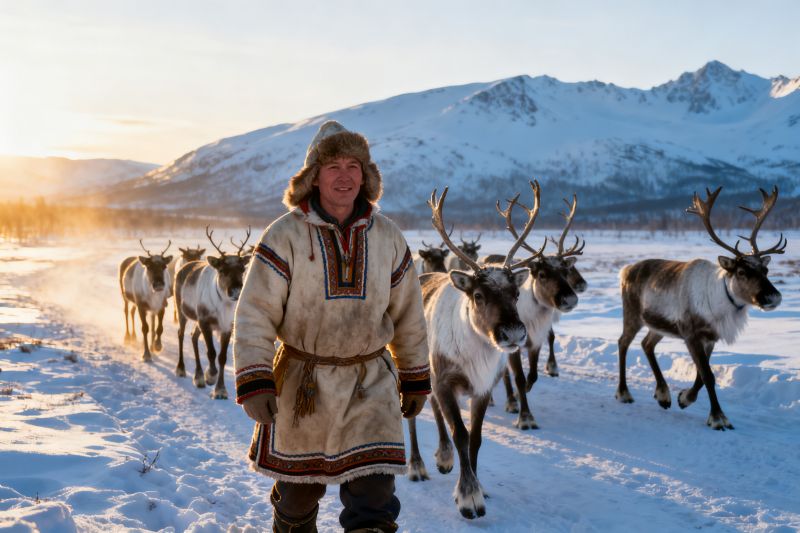
' you are either naming a person from Helsinki or invoking one of Europe's oldest indigenous groups. Context is everything.The Sami population is estimated at 75,000 to 100,000, spread across Norway (about 50,000), Sweden (20,000–40,000), Finland (6,000–10,000), and Russia's Kola Peninsula (2。000–3,000). Nine distinct Sami languages are still spoken, though several are critically endangered. Northern Sami, with roughly 20,000 speakers, is the largest. I once sat in a small museum in Inari, Finland, listening to a recording of a joik—a traditional Sami chant that doesn't describe a person or place but rather 'evokes' it. The curator, a young Sami woman, told me that joik was banned by missionaries well into the 20th century because it was considered pagan. Her grandmother refused to teach her joik. She learned it from YouTube. That detail says more about cultural resilience than any statistic. Languages and songs survive not through institutions but through stubborn individuals who decide that forgetting is not an option.Reindeer herding is the activity most outsiders associate with Sami identity. It's important—roughly 10% of Sami in Norway are involved in herding—but it's not universal. Many Sami live in cities like Tromsø, Rovaniemi, or Murmansk and work as teachers, engineers, or journalists. The herding image, however。has real political weight. In 2021, Norway's Supreme Court ruled that a wind farm in Fosen violated Sami reindeer herders' rights under Article 27 of the International Covenant on Civil and Political Rights. The case took years and drew international attention. I spoke with a herder named Elle who said the fight wasn't about wind turbines per se—it was about whether a state could ignore a minority's livelihood for 'green' energy. That tension between environmentalism and indigenous rights is not unique to Sápmi, but it's sharper here because the Arctic is warming three times faster than the global average. Reindeer need old-growth lichen;wind farms and mining roads fragment the pastures. The Sami aren't against clean energy—they're against being treated as a footnote in someone else's climate solution.
What does it mean to be Sami today?Blood quantum hasn't been the defining criterion for decades. The Norwegian Sami Parliament uses a combination of self-identification。
language connection, and family ties to Sápmi. You can be a blonde, blue-eyed Sami who speaks Norwegian at home and joiks at festivals—and you are still Sami. I find that refreshing compared to the rigid tribal enrollment debates in North America. But it also creates friction: some Sami feel that urban, assimilated individuals claim the label for political or artistic cachet. A young artist I met in Karasjok laughed about this. 'We don't have a card,' she said. 'We have a grandmother.' Her point was that identity is lived, not certified. The Sami Parliaments have no power to define who is Sami;they only maintain the electoral roll for their own elections.My own takeaway: Sami is a word that resists easy definition because it belongs to a people who have survived centuries of forced assimilation, missionary schooling。and border-drawing by states that barely acknowledged them. Norway's 'Norwegianization' policy from the 1850s to the 1960s banned Sami language in schools and forced children into boarding houses. Today, Sami is an official language in Norway and parts of Sweden and Finland. The revival is real but uneven—you'll find Sami-language kindergarten in Kautokeino and almost no Sami signage in parts of Sweden's inland. And the name Sami itself?It's both a personal identifier and a collective claim. Next time you meet a Sami from Helsinki or a Sami reindeer herder from Kautokeino, don't assume they share the same story. They don't. But they share a name that has been fought for, changed, and reclaimed. That's worth more than a definition.